US EXIM, DFC sour on tungsten mine deal backed by Trump sons
Critics on Capitol Hill have accused the administration of pledging billions in funding to unproven companies.
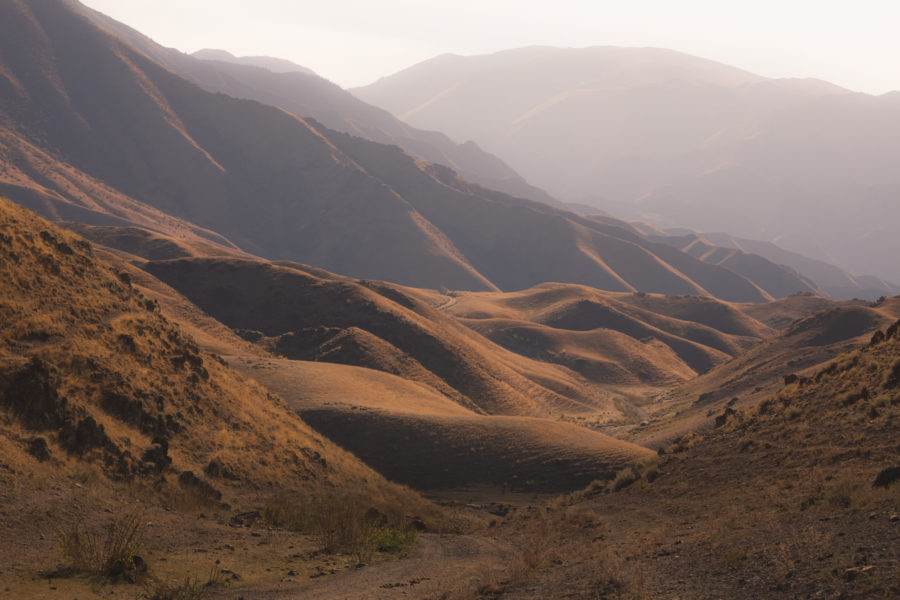
Assy Plateau, Kazakhstan. Stock image.
US government lenders don’t plan to approve $1.6 billion in financing for a Trump administration-brokered Kazakh mining project in which the president’s sons are investors amid concerns about the deal’s viability, according to people familiar with the situation.
Neither the US Export-Import Bank nor the US International Development Finance Corp. plan to fund the tungsten-mining venture for which they issued letters of interest last year, the people said, asking not to be identified discussing matters that aren’t public. Bank officials are concerned about the project’s prospects and the geopolitical risks given Kazakhstan’s location wedged between US rivals China and Russia, the people said.
The Cove Kaz Capital Group LLC deal is among the highest profile of the administration’s efforts to break China’s control over critical minerals. Cove Kaz said Nov. 2 it’s planning a public listing under the name Kaz Resources, Inc. President Donald Trump’s eldest sons, Donald Jr. and Eric, are set to hold a stake of less than 1%, the Wall Street Journal reported.
Commerce Secretary Howard Lutnick facilitated talks with Kazakh officials last year to approve Cove Kaz’s bid, though the company has limited mining experience. Shortly afterward, as part of a White House summit with Central Asian leaders, Cove Kaz announced the Kazakh deal and the EXIM and DFC letters of interest.
But in recent days, a DFC official told Bloomberg News it’s not “actively pursuing a transaction with them at this time,” noting that the company hasn’t advanced beyond the first of four stages of the review process.
An EXIM spokesperson declined to comment.
Cove Kaz Capital said it has had no indication of any change of heart from official lenders.
“We are concerned to hear via the media that certain agency officials may have recently expressed investment opinions on our project prematurely and without direct communication to our company,” Executive Chairman Pini Althaus said in a statement. “To the contrary, in recent weeks U.S. government officials continue to convey full support for this generational asset.”
Althaus participated in a Central Asia summit in Uzbekistan last month attended by Secretary of State Marco Rubio. Althaus said the project doesn’t yet require loan financing and won’t begin the process of formally applying for financing until it completes a definitive feasibility study next year.
According to Cove Kaz, its chief executive, Dominic Heaton, led the team that developed a tungsten mine in Vietnam, the largest such operation outside China. The metal, which is used in missiles and artillery shells, is currently mined mainly in China.
Critics on Capitol Hill have accused the administration of pledging billions in funding to unproven companies, sometimes with financial ties to the Trump family or others close to the administration. The White House has rejected those allegations.
A spokesperson for Donald Jr. and Eric Trump said “neither Don nor Eric has any involvement in the day-to-day management or operations of any of these entities and neither had any involvement in, or advance knowledge of, the company’s decision to pursue a public listing.” Cove Kaz has said the Trumps played no role in the Kazakh deal.
When questioned about the deal in his Senate confirmation hearing on Oct. 1, David Slade, the administration’s nominee as EXIM Bank vice chairman, said, “there is no loan” for the Kazakh project. “So far as I recall, the only thing that has transpired at this point is what we call a letter of interest, which is issued at a very early stage,” he said. “We have received no actual application for that financing.”
Over the last year, EXIM has tightened its standards for issuing letters of interest, concerned that inexperienced mining companies were using the nonbinding documents to help raise outside funding from other investors, according to people familiar with the situation.
EXIM is trying to advance deals in which the agency has a lot of engagement with the counterparty, something it hasn’t had with Cove Kaz, one of the people said. The bank is looking for near-term bankable projects, the person said.
The initial letter of interest from EXIM bank for $900 million of the financing expired in August but the company has filed for a renewal. EXIM allows a single renewal of such non-binding letters for a period of one year, according to its website.
DFC issued a separate letter of interest for its $700 million potential loan.
On Nov. 2, Cove Kaz announced it received a $32 million capital commitment from American Ventures LLC, a fund linked to the Trump family, and is planning the listing in the US next year. The company, which said it is changing its name to Kaz Resources, said the investment implies a $1.97 billion valuation. That would be a 76% step up, the company said, reflecting “investor recognition of the progress we are making toward developing this generational tungsten project.”
The company last year sought EXIM’s backing for the project, detailing a three-phase development plan totaling between $1 billion to $1.2 billion in costs and a project timeline of at least 42 to 48 months, according to documents obtained by Bloomberg News under a Freedom of Information Act request. Included was the investment pitch Cove Kaz Capital submitted last summer to the government seeking funding and EXIM’s subsequent letter of interest.
A recent investor presentation showed that the company aims to be a long-term supplier to the US beginning in 2031. It typically takes between 10 to 20 years to develop a new mine and deliver production to end-use customers.
(By Joe Deaux, Jason Leopold and Kate O’Keeffe)
Comments
No comments yet.