Congo removes boss of artisanal mining regulator amid crackdown
SAEMAPE is responsible for supervising and formalizing artisanal and small-scale mining in Congo.
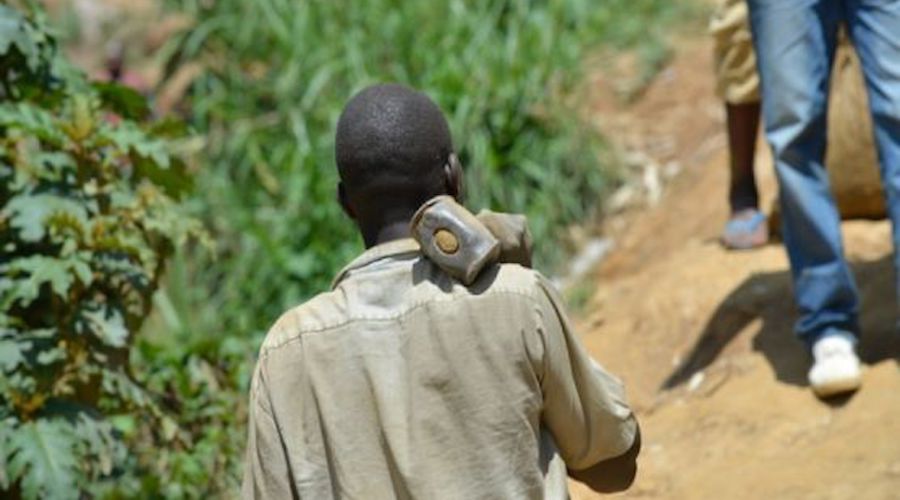
Official figures show that more than 200,000 people make their living digging cobalt and copper in Congo’s southeast Katanga region. (Image courtesy of Entreprise Générale du Cobalt.)
The Democratic Republic of Congo’s mines minister suspended the official in charge of overseeing the artisanal mining sector, as the government tries to curb unauthorized operations on copper-cobalt concessions held by international investors.
Mines Minister Louis Watum removed Jean-Paul Kapongo Kadiobo as director general of the agency known by the French acronym SAEMAPE on Oct. 21, according to a decree seen by Bloomberg News. The order said he failed to prevent “illicit artisanal mining” within permits assigned to other firms.
The decision comes shortly after about 300 Chinese nationals working in Congo’s copper belt were detained as part of a crackdown on illegal mining. Bloomberg reported the arrests, which took place mostly around the city of Kolwezi, on Oct. 16.
Chinese mining and processing companies account for most copper and cobalt production in the central African country where the two metals are often found together.
SAEMAPE is the government body responsible for supervising and formalizing artisanal and small-scale mining in the world’s second-biggest copper supplier and top source of battery material cobalt. The provincial head of the agency in Lualaba, of which Kolwezi is the capital, was also suspended, according to local media reports.
Foreign companies such as CMOC Group Ltd., Glencore Plc and Zijin Mining Group Co. Ltd. produce most of the copper and cobalt in Congo. But the artisanal sector provides livelihoods for hundreds of thousands of local people who typically operate – sometimes protected by members of the armed forces – inside licenses held by industrial mining firms.
Kapongo Kadiobo was suspended for having “irregularly installed” SAEMAPE tax collectors inside mining permits in which artisanal miners were working without permission, according to Watum’s order.
Kapongo Kadiobo didn’t immediately respond to phone calls and emails seeking comment.
Government efforts to reduce artisanal activity in particular concessions or inspect the plants processing the minerals can lead to tensions between the authorities and miners. In protests last week around Kolwezi, miners erected barricades, burned tires and clashed with the police, according to local media reports.
A multi-agency commission sent from the national capital, Kinshasa, is in Kolwezi to “clean up our mining environment,” the governor of Lualaba, Fifi Masuka, said on Oct. 21. Its mission includes “demilitarizing” mining sites, auditing processing plants and transferring the artisanal workforce to authorized areas, according to her statement.
Alongside those digging for ore with rudimentary tools, the artisanal sector “has become increasingly mechanized” in recent years, according to a report published last month by Belgium’s International Peace Information Service. These operations involve the “growing use of equipment such as crushers and excavators, largely driven by foreign investment,” IPIS said.
Congo’s government agreed to a deal on Oct. 23 for more than 20,000 miners to leave a well-known site called Kamilombe, which is in a license belonging to state-owned Gecamines, and move to a new area created for artisanal operations.
(By William Clowes)
Comments
No comments yet.