Russia to make miners pay for high war spending via new tax
The Finance Ministry proposed the extra tax on additional income earned from sales of gold, some base metals and fertilizer.
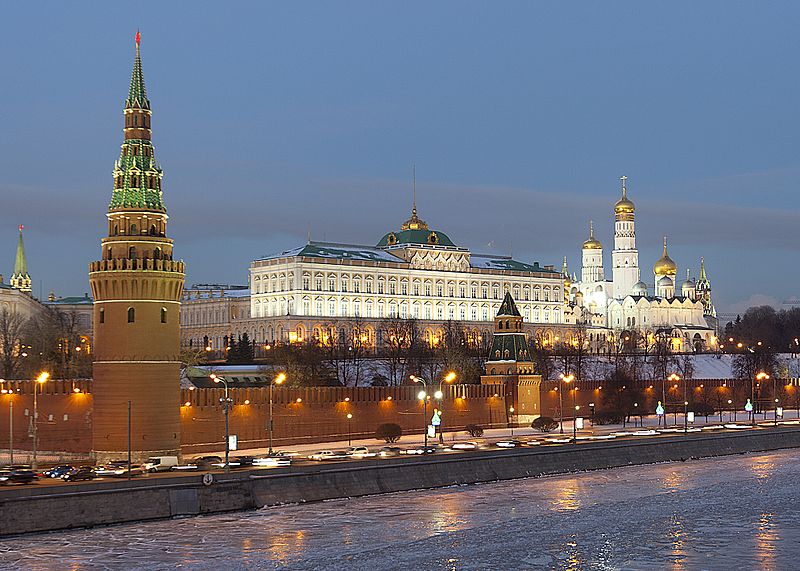
Kremlin, Moscow. Credit: Wikimedia Commons
Russia will collect a windfall tax on key commodities producers and impose some other duties to rein in a budget deficit that’s widened significantly due to heavy military spending on the war in Ukraine and lagging oil revenue.
The Finance Ministry proposed the extra tax on additional income earned from sales of gold, some base metals and fertilizer due to a global increase in commodity prices, according to a statement Thursday. The ministry proposed a 20% tax rate on revenue from gold, while some other miners and fertilizer producers would face a 30% levy.
The government aims to keep the 2027 deficit at around 2% of gross domestic product, compared with as much as 3% expected by the end of this year, confirming what Finance Minister Anton Siluanov said earlier this week. Planned budget spending will include expenditure on weapons and military equipment, upgrades to defense-industry facilities, military pay and financial support for the families of service members, according to the statement.
Russia is the world’s second largest producer of gold, top exporter of fertilizers, and one of the key suppliers of several base metals. It has benefited from elevated prices across most of these commodity groups.
Gold prices peaked at a record of more than $5,300 an ounce in January and, although they have declined since then, remain elevated. Copper is also trading near historically high levels of more than $14,000 a ton, while prices for several other base metals remain strong. In the fertilizer sector, prices have been supported by the war in Iran, which eventually led to the closure of the Strait of Hormuz and heightened concerns over global supplies.
The strain from the Kremlin’s war, now well into its fifth year, and weaker energy income has narrowed the government’s room to maneuver. With defense spending and social commitments largely protected, officials had to resort to other measures to narrow the budget shortfall.
Fiscal tightening could also give the Bank of Russia more room to lower borrowing costs after spending levels contributed to a slowing pace of interest-rate cuts this year. Siluanov earlier said the Finance Ministry had coordinated with the central bank on the updated budget parameters and that budget policy should create room for monetary easing.
The coming tightening will start from a much weaker position than the current budget anticipated. Last year, the government projected a deficit of just 1.2% of GDP for 2026, but heavy war-related outlays and lagging energy revenue have put that target out of reach. The deficit stood at about 2.5% of GDP in January-August.
Russia’s federal budget revenue is expected to reach 43.3 trillion rubles ($510 billion) next year, while spending is projected at 48.8 trillion rubles, Prime Minister Mikhail Mishustin said on Thursday. That will bring the deficit to 2.2% of GDP, he said.
What Bloomberg economics says…
“The headline deficit path for 2027–29 looks reassuring and broadly consistent with the central bank’s earlier projection: a return to the fiscal rule by 2029 and consolidation of about 2% of GDP over three years. But that path is credible only if the planned defense numbers are.
The key question is whether the Finance Ministry will deliver painful cuts to civilian spending or once again massage the fiscal outlook by understating defense spending, making a larger deficit all but certain. The answer will determine both the credibility of the budget and the path of monetary policy.”
— Ekaterina Vlasova, CEE & Russia Economist
The Finance Ministry will lower the oil-price threshold used to determine when excess energy revenue is saved to $50 a barrel from $58. The $50 cut-off would remain in place throughout the three-year budget period, Siluanov said earlier.
Siluanov has said the new threshold should make public finances less vulnerable to commodity-price swings and reduce the risk of having to draw down reserves when oil prices fall.
The ministry proposed broadening the tax rate on passive income, with rates ranging from 13% to 22% versus 13% to 15% under current law. The change would apply to dividends and other equity income, interest on deposits, securities and digital-rights transactions, property and stake sales, insurance proceeds and gifts, but won’t affect low-income individuals or participants in the war.
The Finance Ministry is also proposing a 15% tax on income from mutual funds and an increase to 35% in the rate on dividends accruing to foreigners for assets frozen in Russia.
Russia plans to spend approximately 240 billion rubles ($2.8 billion) on budget categories for machine tools and unmanned aerial systems, both of which support the war effort, over the next three years, the Finance Ministry said.
Comments
No comments yet.